Peninsula kitchens and the ranges in them
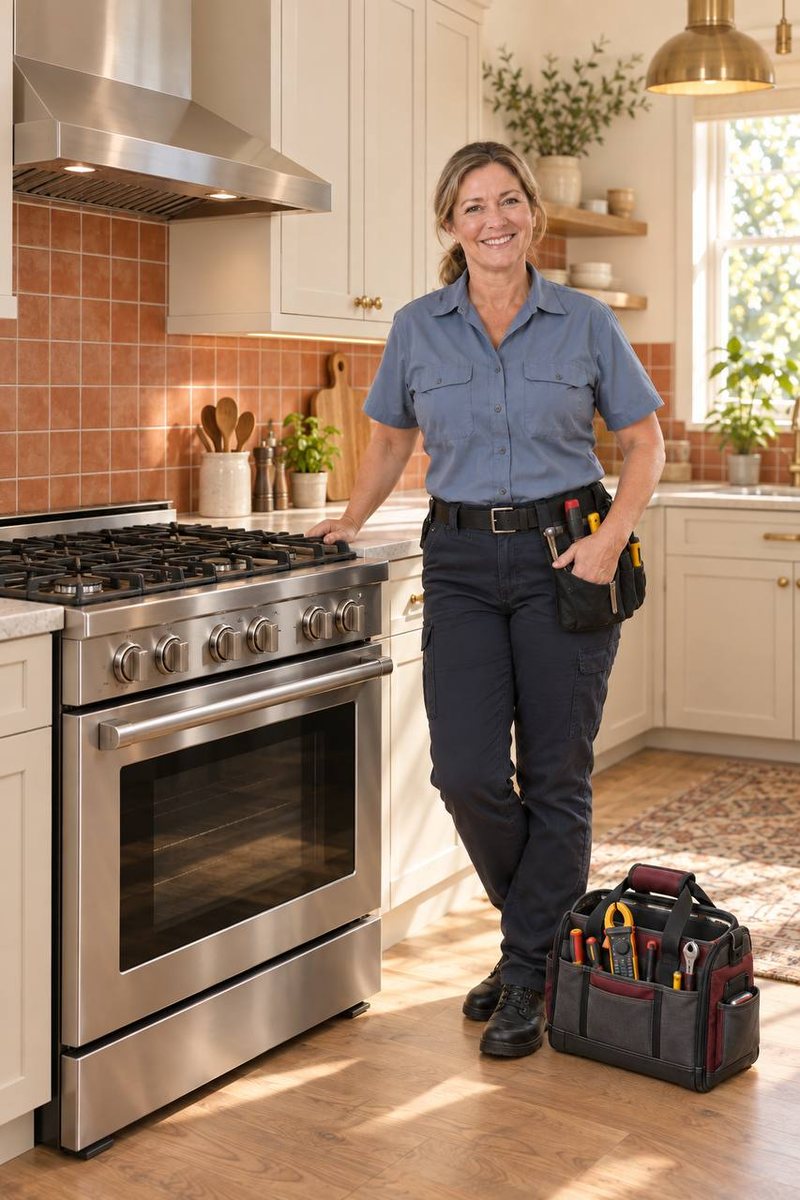
A downtown Charleston kitchen tells you its history. In South of Broad and Harleston Village the kitchen is often the old dependency joined to the main house, with a range fitted into a space built for a hearth. In Wagener Terrace and around Hampton Park the 1920s bungalows have had two or three kitchen renovations, and the range is whatever the last one chose, from a coil-top GE to a dual-fuel Thermador. Near MUSC and the Citadel the housing is student and staff rentals with builder-grade electric ranges that see hard use. We drive down I-26 from Park Circle in about fifteen minutes and park where the block allows; the technician walks the rest.
Gas ranges on the peninsula fail at the igniters first. The spark modules and the oven’s hot-surface igniter live in humid air, and a bake igniter that draws a little less current each year finally cannot open the gas valve. That is the oven that preheats forever and never reaches temperature. Electric ranges fail at the bake element and the relay board, and glass-top units at the burner switches. Here is a typical call from a Harleston Village rental: the tenant says the oven works sometimes. The landlord thinks it is the tenant. The meter says the igniter is drawing 2.6 amps when the valve wants 3.2, and the part is on the van.
Range and oven symptoms, read by the meter
Oven never reaches temperature
On gas, a weak bake igniter that glows but cannot pull enough current to open the safety valve. On electric, a bake element with a break or a failed relay on the control board. We measure igniter current or element resistance directly and confirm the valve or relay before we quote.
Burner clicks and will not stop
Moisture in the spark switch or the igniter electrode, a cracked electrode insulator, or a spark module that is stuck on. Often a boil-over got into the switch. We dry and test each switch, isolate the one that is shorted, and replace the switch or the module. A single failed switch can fire every burner.
One burner dead, the rest fine
Electric: a failed element, a burnt receptacle, or an infinite switch that has opened. Glass-top: a radiant element or the switch behind it. Gas: a plugged burner port or a spark electrode with no gap. We swap to a known-good element first, then test the switch and the receptacle with the meter.
Oven heats unevenly or burns one side
A convection fan that has stopped, a bake element with a partial break, or a temperature sensor drifting high or low. We read the sensor resistance at room temperature against specification, check the fan, and calibrate the control if the hardware is sound. Wall ovens in built-in cabinetry get the same procedure.
Oven door will not lock or unlock
A self-clean cycle that ended in a power blip, a lock motor that has failed, or a door switch reading wrong. We release the lock manually, then test the motor and the switch. On older peninsula ranges we also check the hinges, which are often the real reason the door never seated.
Control panel dead or flashing after a storm
A hurricane-season surge or a brownout has damaged the electronic oven control or its transformer. We check the supply first, including the neutral, then the board inputs and outputs. If the control has failed we replace it and recommend a surge protector for the circuit before we leave.
The procedure
- Igniter current or element resistance measured, never guessed from the symptom.
- Gas connections leak-tested with solution after any work on the range.
- One written figure, with the $99 diagnostic already counted in.
- Igniters, elements, switches and sensors stocked for the common brands on the van.
- Oven brought to temperature and verified with a probe before we leave.
How stove and oven repair runs downtown
We ask what you cook and what failed, then take the machine apart only as far as the answer requires. For a gas oven, that means clamping an ammeter on the igniter lead and watching it glow; the number tells us whether it is weak, and the valve stays closed for a reason we can show you. For an electric oven, we read the bake and broil elements for resistance and check for a short to ground, then move to the control board relays. Surface burners are isolated one at a time. Wall ovens come out of the cabinet only when the repair demands it. When the part has a name, you get one written price. Nothing is ordered or replaced until you approve it.
Van stock covers the igniters, elements, switches and sensors for Whirlpool, GE, Frigidaire, Samsung, LG, KitchenAid, Maytag and Kenmore, and we service the Wolf, Viking, Thermador, Miele and JennAir ranges and wall ovens that peninsula kitchens favor, ordering the less common parts with a return visit that carries no second trip fee. Landlords near the Citadel and MUSC and owners of short-term rentals off King Street get the visit handled through the tenant or the cleaner, the written price by text, and the invoice and warranty by email. The bill is built one way: $99 for the diagnosis, already counted inside the repair price you approve. Choose not to repair and $99 is the whole charge. Book online and the repair is reduced by up to $20.
Asked in Downtown Charleston
Do you repair the big Wolf and Viking ranges in Downtown Charleston kitchens?
Yes. Pro-style 36- and 48-inch ranges are common South of Broad and in Harleston Village renovations, and they are on our route regularly. Igniters, spark modules and switches for the common configurations ride on the van; the rest we order and return with, at no second trip fee. The diagnosis is the same $99 whatever the badge on the door.
My oven smells of gas for a moment before it lights. Is that normal?
A brief smell as the burner lights is normal for a gas oven. A smell that lingers, or gas with no flame, is not: shut the oven off, open a window and call us. It usually means an igniter too weak to light the gas the valve is releasing. We test the igniter under load and leak-check the connections with solution.
Can you work in a peninsula kitchen with a tight side-yard entrance?
We do it every week. Downtown Charleston kitchens are often reached along a piazza or through a gate into the side yard, and we plan the approach when you book. Most range repairs need only a tool bag and the part, not a dolly, so access is rarely a problem. If the range must come out of a built-in surround, we bring floor protection.
Why does my glass-top range trip the breaker?
A radiant element or a burner switch has shorted to ground, or the terminal block where the power cord lands has burned. All three are common on ranges over ten years old. We isolate the circuit with the meter, replace the shorted part, and inspect the terminal block and cord before restoring power.
Does a downtown Charleston range repair cost more because of parking?
No. Parking and drive time are ours to manage, and there is no peninsula surcharge. The $99 diagnostic is fixed and it sits inside the repair price when you approve the work. Turn the work down and $99 is the entire bill. Booking online takes up to $20 off the repair, not the diagnostic.